


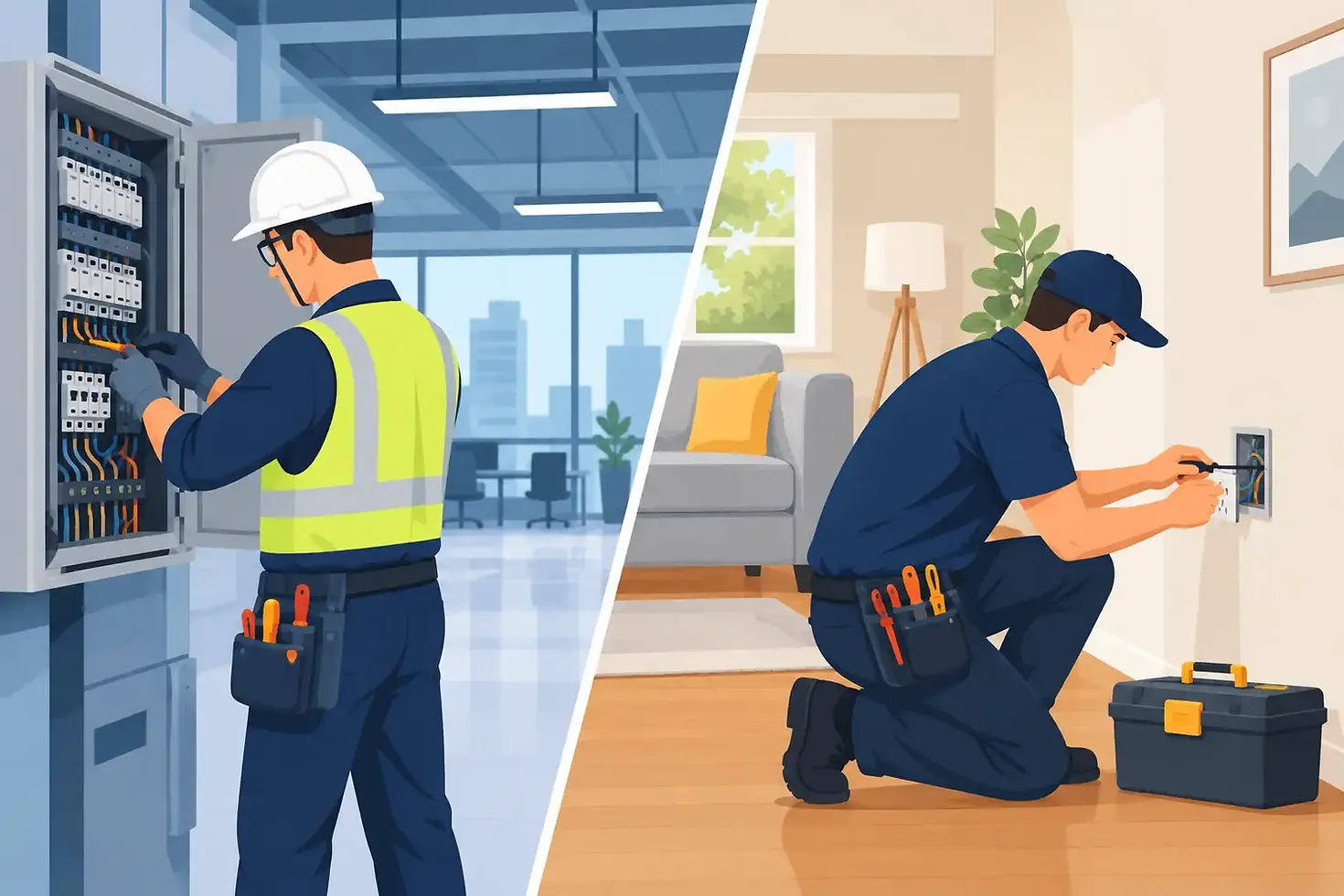
Commercial Electrician vs Domestic Electrician
A tripping circuit in a family home and a failed distribution board in a busy shop may both require an electrician, but the work behind each callout can be very different. The commercial electrician vs domestic electrician question matters because choosing someone with the right experience can affect safety, compliance, downtime and the long-term reliability of an installation.
Both professionals work to keep electrical systems safe, functional and compliant. The key difference is not that one is automatically better than the other. It is the type of premises, the scale of the installation, the risks involved and the practical demands of the job.
Commercial electrician vs domestic electrician: the main difference
A domestic electrician works primarily in homes, flats, rental properties and small residential developments. Their work often includes consumer unit upgrades, full and partial rewires, additional sockets, lighting, cooker circuits, electric showers, fault finding and Electrical Installation Condition Reports (EICRs).
A commercial electrician works in premises used for business or public activity, such as shops, offices, cafés, hotels, schools, warehouses and workshops. These installations are often larger, have more circuits and may need to support emergency lighting, fire alarms, three-phase equipment, fixed machinery, commercial kitchens, data systems or ventilation controls.
The divide is not always absolute. A small office may have an electrical system that is relatively straightforward, while a large house with an outbuilding, electric vehicle charging, solar equipment and a heat pump can be technically demanding. What matters is whether the electrician understands the equipment, the environment and the relevant safety duties.
The work carried out in domestic properties
Domestic electrical work tends to focus on the safety and convenience of everyday living. Homeowners may call an electrician after a circuit starts tripping, lights flicker, sockets become loose or an older property shows signs of ageing wiring.
Rewires are a common example. Older Blackpool and Fylde Coast properties can contain installations that have been altered over many years, with outdated accessories, insufficient circuits or cable insulation that has deteriorated. A domestic electrician assesses the existing installation, plans circuits around modern household demand and works carefully to keep disruption manageable for the people living there.
Domestic work also requires good judgement about how a home is used. Kitchen circuits, bathrooms, loft conversions, garden power and rented accommodation all have particular considerations. A qualified electrician will not simply add a socket or replace a fitting without checking whether the circuit, earthing and protective devices are suitable.
For work in homes, electrical installation work must comply with BS 7671, commonly known as the IET Wiring Regulations. Certain work may also fall under Building Regulations requirements, including Part P in England. The precise notification requirements depend on the nature and location of the work, so homeowners should ask what certification and paperwork will be provided before the job begins.
What changes in commercial electrical work
Commercial sites are usually designed around operations rather than domestic routines. A shop needs lighting that presents products well and allows staff to work safely. An office needs dependable power for workstations, servers and communications equipment. A restaurant may depend on refrigeration, extraction and kitchen equipment throughout trading hours.
This makes continuity particularly important. A failed circuit in a house is inconvenient and may be urgent. A failed circuit in a business can stop trading, affect staff safety, spoil stock or leave a premises without essential systems. Commercial electricians therefore often plan work around opening hours, arrange safe isolation procedures and complete installations in phases to reduce disruption.
The electrical loads can also be different. Commercial premises may use three-phase supplies, which are common where larger motors, machinery or higher electrical demand are involved. These systems need specific knowledge of distribution arrangements, load balancing, isolation and testing. They are not simply a bigger version of a domestic consumer unit.
Commercial jobs frequently involve coordination with other trades and building systems. Installing a fire alarm, emergency lighting or new distribution equipment may require careful planning with facilities managers, landlords, builders, IT contractors and staff on site. Clear labelling, accurate test results and proper handover documentation are essential, particularly where several people are responsible for the building.
Compliance and dutyholder responsibilities
All electrical installations need to be safe, but businesses have additional responsibilities because employees, customers, contractors and visitors may be exposed to risk. The Electricity at Work Regulations place duties on those responsible for electrical systems in workplaces to ensure they are constructed and maintained to prevent danger.
In practice, that means commercial electrical inspections and maintenance should be planned rather than left until something fails. An EICR identifies defects, deterioration, overloaded circuits, inadequate earthing and other issues that need attention. The appropriate inspection interval depends on the type of premises, its use and the condition of the installation. A busy workshop and a low-use office do not necessarily carry the same level of risk.
Landlords also have clear responsibilities in rented homes. A valid EICR is required at least every five years for most private rented tenancies in England, or sooner if the report recommends it. Owner-occupiers are not subject to the same legal requirement, but periodic inspection remains a sensible way to identify hidden problems before they become dangerous or costly.
Skills that overlap, and skills that become specialised
A competent electrician in either setting needs a strong grounding in safe isolation, inspection, testing, fault finding, circuit design, earthing and the requirements of BS 7671. They should work methodically, explain findings clearly and provide the right certification for completed work.
Experience becomes more specialised as the installation becomes more complex. A domestic specialist may be exceptionally capable with rewires, consumer units and residential fault finding. A commercial specialist may have deeper experience of three-phase distribution, containment systems, emergency lighting, fire alarms, plant rooms and maintaining electrical systems in occupied business premises.
For that reason, it is worth asking relevant questions rather than relying on a broad job title. If you manage a café, ask whether the electrician has worked around commercial catering equipment and can schedule work outside trading hours. If you are renovating a Victorian terrace, ask about experience with older wiring, hidden defects and the practical stages of a rewire.
Cost, timescales and disruption
Commercial work can cost more because installations are often larger and the planning is more involved. There may be longer cable runs, more extensive testing, specialist equipment, access arrangements, out-of-hours work and the need to maintain essential services while work is carried out.
Domestic work can also vary significantly in cost. Replacing a light fitting is very different from rewiring an occupied property, upgrading a consumer unit or finding an intermittent fault behind walls and ceilings. A reliable quotation should set out what is included, any assumptions made and the likely next steps if the electrician discovers an issue that could not reasonably be seen at the start.
Disruption should be discussed early. In a home, that may mean agreeing which rooms are worked on first and whether the power will be off for periods of the day. In a commercial property, it may involve arranging a shutdown, protecting customers and staff, and ensuring temporary measures are safe.
How to choose the right electrician
The right choice begins with an accurate description of the job. Explain the type of property, the age of the installation, what has changed, when the fault occurs and whether any equipment is affected. Photographs can help with minor enquiries, but they do not replace an on-site assessment where safety is in question.
Choose an insured electrical contractor who can demonstrate relevant experience, carries out proper testing and provides clear certification. For a commercial site, ask about experience with your type of premises and whether the contractor can work around your operating hours. For a home or rental property, confirm what documentation will be issued and whether any Building Regulations notification is needed.
Do not ignore warning signs because the power is still working. Burning smells, warm accessories, repeated tripping, buzzing, damaged cables, shocks and flickering lights all deserve prompt professional attention. Switch off the affected circuit if it is safe to do so, avoid attempting repairs yourself and arrange an inspection.
Blackpool & Fylde Electrical Services Limited supports homeowners, landlords and local businesses with practical electrical work, testing and responsive fault finding across the area. Whether the need is domestic or commercial, the priority is the same: understand the condition of the installation, deal with risks properly and leave clear evidence of the work completed.
If you are unsure which type of electrician your job requires, start with the building and the risk, not the label. A straightforward conversation with a qualified contractor before work begins can prevent avoidable disruption and help keep the people who use the property safe.


Comments