


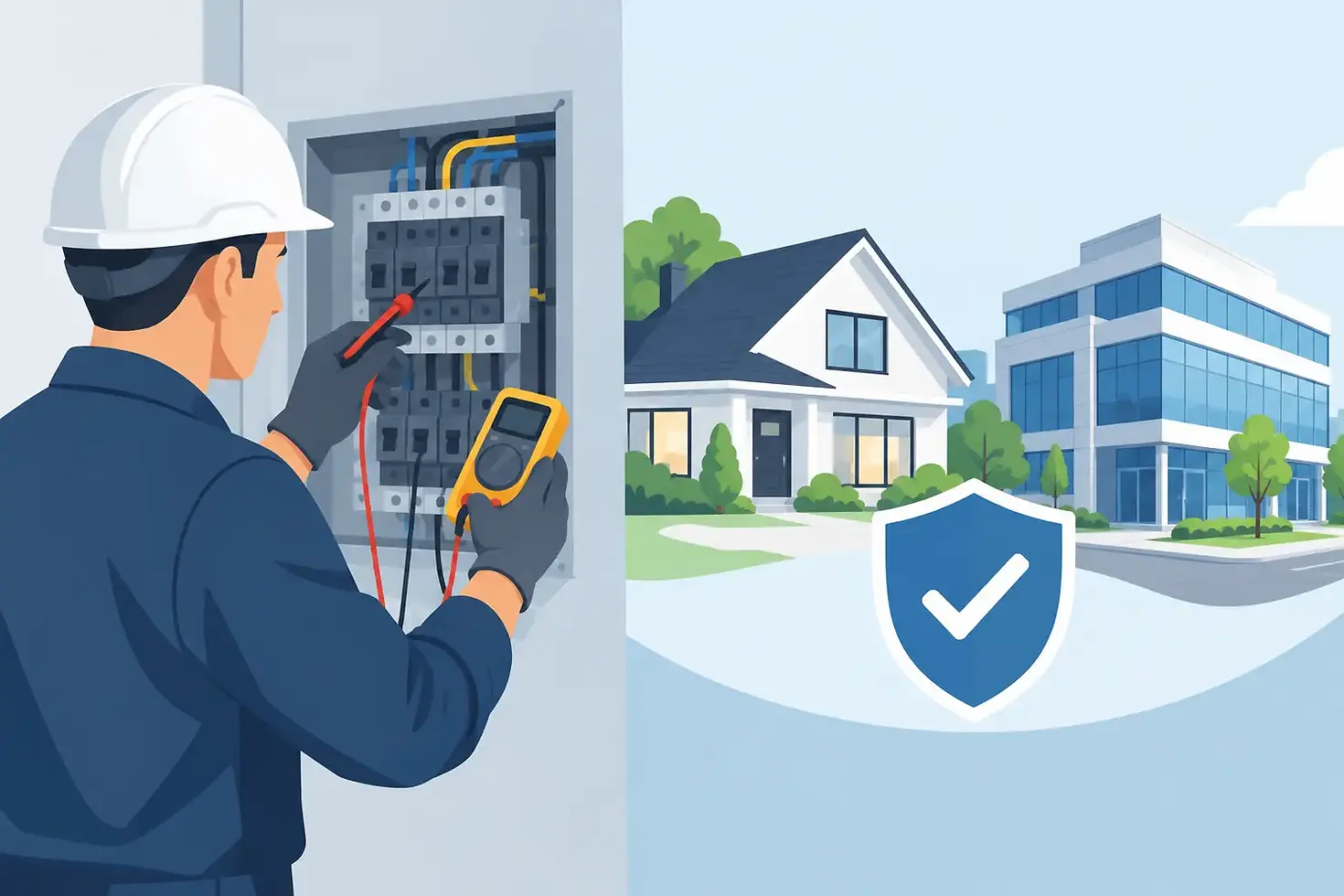
Electrical Testing for Safer Homes and Businesses
A consumer unit that has not tripped for years can still hide a serious fault. Loose connections, deteriorating cable insulation and overloaded circuits often develop out of sight, particularly in older properties around Blackpool and the Fylde Coast. Electrical testing is the practical way to find these issues before they lead to electric shock, fire, damaged equipment or an unexpected loss of power.
For homeowners, landlords and business owners, testing is not simply a box-ticking exercise. It provides a clear picture of an installation's condition and helps you make sensible decisions about repairs, upgrades and ongoing maintenance.
Electrical testing: what it actually involves
Electrical testing is carried out alongside a detailed visual inspection. A qualified electrician checks the condition of accessible parts of the installation, then uses calibrated test equipment to assess whether circuits and protective devices are operating safely.
The work may include checking earthing and bonding, circuit continuity, insulation resistance, polarity, fault protection and the operation of RCDs. An RCD is designed to disconnect the supply quickly if it detects an imbalance that could indicate current flowing to earth. It is a valuable layer of protection, but it must be correctly selected, installed and tested.
The electrician will also look for visible concerns such as damaged accessories, signs of overheating, unsuitable wiring methods, missing labels, overloaded circuits and alterations that do not appear to meet current safety requirements. Testing cannot make an old installation new, but it can identify whether it remains safe to use and where attention is needed.
An EICR is not the same as a quick fault visit
An Electrical Installation Condition Report, usually called an EICR, is a formal assessment of an existing installation. It is commonly required for rented homes, but it is equally useful for owner-occupied properties, shops, offices, workshops and industrial units.
A fault-finding visit has a different purpose. If sockets have stopped working, lights are flickering or an RCD keeps tripping, the immediate job is to locate and repair the cause. The electrician may carry out tests as part of that work, but this does not necessarily amount to a full inspection and condition report for the whole property.
Similarly, testing a newly completed circuit is part of installation work. The circuit must be verified before it is put into service, and appropriate certification should be issued. Knowing which service you need prevents assumptions and ensures you receive the right level of inspection.
When should you arrange an inspection?
There is no single timetable that suits every property. The right interval depends on the type of premises, how the installation is used, its age, the environment and whether previous reports have identified concerns.
Landlords in England must have the electrical installation in rented accommodation inspected and tested at least every five years, or more often if the report recommends it. A copy of the report must be provided to tenants and retained as required. This is a legal duty, not an optional maintenance task.
For homeowners, an inspection is particularly sensible when buying an older property, planning major alterations, noticing recurring electrical issues or taking responsibility for a home with no recent paperwork. Properties with original wiring, older fuse boards or signs of previous DIY alterations deserve closer attention.
Commercial and industrial settings may need more frequent testing because of heavier use, public access, machinery, damp conditions, heat, vibration or the consequences of downtime. A quiet office and a busy workshop should not be treated in the same way. Site-specific risk and the recommendations on the last report should guide the programme.
What happens during electrical testing?
Before work begins, the electrician should discuss the property, known faults, previous certificates and any equipment that must remain powered where possible. In a business, this conversation should include operational restrictions, alarm systems, IT equipment, refrigeration and machinery. A planned inspection is safer and causes less disruption than one arranged after a failure.
Some circuits may need to be switched off while tests are completed. That can interrupt lights, sockets and fixed equipment for short periods. In most cases, a competent electrician will work methodically to minimise disruption, but it is better to expect controlled isolation than to be surprised by it.
Not every cable is accessible without lifting floors, opening voids or disturbing finishes. An EICR is therefore based on the parts of the installation that can reasonably be inspected and tested at the time. Any limitations should be recorded clearly. Where there is evidence of a concealed problem, further investigation may be recommended rather than guessed at.
At the end of the inspection, you should receive documentation explaining the outcome, observations and recommended actions. Keep it with other property records. It is useful evidence for landlords, insurers, future buyers and anyone carrying out later electrical work.
Understanding EICR observations
An unsatisfactory report does not automatically mean the whole installation is dangerous or needs a complete rewire. It means one or more observations require action before the installation can be judged satisfactory. The coding helps prioritise the work.
A C1 observation identifies danger that requires immediate attention. A C2 observation indicates a potentially dangerous condition where urgent remedial work is needed. FI means further investigation is required without delay because the inspector cannot confirm the issue is safe. These observations normally result in an unsatisfactory outcome until resolved.
A C3 observation is an improvement recommendation. It may highlight an installation that does not meet the latest standard but is not necessarily unsafe. For example, an older arrangement may work safely while still benefiting from modern protective devices or clearer circuit identification. The correct response depends on the condition, risk and use of the property, rather than replacing equipment purely because it is old.
This distinction matters. Good electrical advice should explain what must be addressed now, what is advisable to improve, and why. It should also provide a clear scope and price for remedial work rather than leaving you with unexplained codes.
Common issues found in older local properties
Across the Fylde Coast, older housing can contain a mixture of electrical work completed over several decades. A property may have a modern kitchen circuit beside ageing cable, a newer consumer unit connected to old accessories, or extensions added without clear certification. These combinations are not automatically unsafe, but they need proper assessment.
Common concerns include brittle or deteriorated cable insulation, inadequate earthing arrangements, damaged sockets, circuits without suitable RCD protection and overloaded additions such as garages, sheds or loft conversions. Water ingress, corrosion and poorly installed outdoor supplies can also create risks, especially in exposed coastal conditions.
Businesses face their own recurring problems. Extension leads used as permanent wiring, altered layouts, equipment added without checking circuit capacity and neglected distribution boards can all lead to overheating or nuisance tripping. Testing provides the evidence needed to correct these issues before they affect staff, customers or operations.
Preparing for an inspection
You do not need technical knowledge to help an inspection run smoothly. Make the electrician aware of any recurring tripping, burning smells, tingling from metalwork, damaged fittings or circuits that behave unpredictably. If you have older certificates, consumer unit schedules or records of alterations, have them available.
Clear access to the consumer unit, meter area, sockets and distribution boards where practical. In a rental property, coordinate access with tenants and give suitable notice. In commercial premises, identify a responsible person who understands which equipment cannot be switched off without planning.
Do not remove covers, reset repeatedly tripping breakers or attempt repairs yourself before the visit. A breaker that will not stay on is giving a warning. Leave the affected circuit off if safe to do so, avoid using damaged equipment and arrange professional help promptly.
Choosing the right electrical contractor
The quality of testing depends on the person carrying it out, not just the certificate issued at the end. Choose an insured, competent electrical contractor with experience in the type of property involved, whether that is a family home, a portfolio of rentals, a retail unit or an industrial site.
Ask what the inspection includes, whether power interruptions are expected, how limitations will be handled and when you will receive the report. A transparent quotation should make clear whether remedial work is included or priced separately. Be cautious of inspections that promise a result without allowing enough time to inspect and test properly.
Blackpool & Fylde Electrical Services Limited provides practical inspection, testing and remedial support for domestic, commercial and industrial properties, with clear advice on the work that is genuinely needed.
If your last report is out of date, your property has changed use, or an electrical fault keeps returning, arranging an inspection now gives you the information needed to act calmly rather than responding under pressure after a failure.


Comments