

How to Prepare for an EICR Before Inspection
- Paul Wild
- 7 hours ago
- 6 min read
An Electrical Installation Condition Report is not a test you pass by tidying up the cupboard under the stairs. However, knowing how to prepare for an EICR can make the inspection safer, more efficient and less disruptive for everyone involved. It also gives the electrician proper access to the parts of the installation that need checking, from the consumer unit to socket outlets, fixed equipment and circuits in less visible areas.
For homeowners, landlords, managing agents and business owners across Blackpool and the Fylde Coast, preparation is mostly about access, information and realistic expectations. You should not attempt electrical repairs yourself before an inspection. A qualified electrician needs to see the installation as it is, identify any concerns accurately and explain what should happen next.
What an EICR involves
An EICR assesses the condition of an existing electrical installation. It looks for signs of damage, deterioration, defects, poor workmanship and non-compliance that could give rise to danger. The inspection includes visual checks and electrical testing, often at the consumer unit, sockets, lighting circuits, switches, distribution boards and fixed electrical equipment.
Some circuits may need to be switched off briefly while testing takes place. This is normal. The level of disruption depends on the size, age and complexity of the property. A small flat with a modern consumer unit is very different from a multi-let building, busy shop, workshop or industrial unit with several distribution boards and specialist machinery.
The report does not automatically mean work is required because an installation is old. Electrical standards change over time, and an older installation is not necessarily unsafe. The key question is whether the condition of the installation presents a risk now.
How to prepare for an EICR: access comes first
The most useful thing you can do is make the electrical installation accessible. An electrician cannot properly inspect or test equipment that is blocked by furniture, stock, stored belongings or locked doors.
Before the appointment, clear a sensible working area around the consumer unit or fuse board. There should be enough room to open the cover safely and use test equipment. If it is inside a cupboard, remove coats, cleaning products, boxes and anything else that restricts access. Do not remove covers from the consumer unit yourself.
Make sockets, switches and light fittings reasonably accessible where possible. You do not need to empty every room or move heavy furniture across the property, but let the electrician know about outlets behind built-in units, large appliances or fixed displays. In commercial and industrial premises, arrange access to plant rooms, risers, service cupboards, storerooms and any locked areas containing electrical equipment.
If a circuit serves an outbuilding, garage, cellar, loft, communal area or external equipment, make sure that area can be accessed too. Gates, keys and alarm codes can cause unnecessary delays when they have not been arranged in advance.
Tell the electrician about known issues
An EICR is more effective when the person responsible for the property shares what they already know. There is no benefit in keeping problems quiet in the hope they will not be found. Clear information helps the electrician focus on potential risks and investigate recurring faults properly.
Mention issues such as sockets that feel warm, lights that flicker, circuit breakers that trip, damaged accessories, loose fittings, burning smells, electric shocks or tingling from equipment, and signs of water ingress near electrics. Also explain if recent building work, decorating, kitchen fitting, roofing work or plumbing repairs may have affected cables or accessories.
For a business premises, advise the electrician about equipment that cannot be switched off without planning. This could include servers, refrigeration, medical or care equipment, production machinery, security systems or fire alarms. Testing arrangements can then be planned around operational needs rather than creating avoidable downtime.
Gather previous electrical records
Locate any paperwork you have before the visit. Previous EICRs, Electrical Installation Certificates, Minor Electrical Installation Works Certificates, fire alarm records and details of recent alterations can all be useful. They give context about the installation and may help identify what circuits or equipment have been added since the last inspection.
This is particularly valuable for landlords and property managers. Keep copies of certificates alongside tenancy, maintenance and safety records, and make sure the address and property details are correct. If there has been a change of ownership or management, do not assume the previous agent has passed on every document.
Records do not replace inspection and testing, but they can reduce uncertainty. If you have no paperwork, do not worry. The electrician can still carry out an EICR, although tracing circuits in older or altered properties may take longer.
Plan for temporary power interruption
Testing may require individual circuits, or occasionally the whole installation, to be isolated for short periods. Charge mobile phones, laptops and essential battery-powered devices beforehand. If you work from home, avoid scheduling important video calls or online meetings during the inspection window.
At home, reset clocks if required afterwards and be prepared for internet routers, heating controls and appliances to restart. Check whether you have electrically operated gates, alarms or pumps that need specific arrangements.
In commercial settings, speak to staff, tenants or contractors who may be affected. It may be better to schedule the work outside trading hours, during a quieter period or in stages. That decision depends on the building and the nature of the business. A planned, well-communicated inspection is safer than trying to test around busy work areas without proper control.
Arrange access and consent in rented properties
Landlords must ensure the electrician can access the installation and relevant rooms. Give tenants suitable notice of the appointment and explain that the visit is a safety inspection, not a fault-finding exercise caused by their behaviour. A calm explanation helps avoid missed appointments and makes it more likely that access will be available.
Tenants should avoid covering or blocking the consumer unit and should point out anything they have noticed, such as tripping circuits or damaged sockets. They should not attempt to replace electrical accessories, alter wiring or open the consumer unit before the visit.
For communal buildings or managed sites, confirm who holds keys for electrical intake rooms, meter cupboards and communal distribution boards. One inaccessible board can prevent a complete assessment of the installation.
Keep people, pets and work areas safe
The electrician needs a clear, dry working environment. Keep children and pets away from the immediate work area, particularly while the consumer unit is open or circuits are being tested. If there are hazards such as wet floors, loose flooring, poor loft access or a restricted plant room, mention them before the appointment.
At a business or industrial site, normal site safety procedures still apply. Provide any required induction information, identify asbestos registers where relevant, and explain vehicle movements, restricted zones or permit requirements. An EICR should be carried out efficiently, but never by bypassing sensible safety controls.
Do not try to fix faults before the inspection
It can be tempting to replace a cracked socket faceplate, reset a frequently tripping breaker or hide a loose cable before the electrician arrives. Avoid this unless the work is being completed by a competent, qualified person. Unauthorised alterations can make faults harder to trace and may introduce new risks.
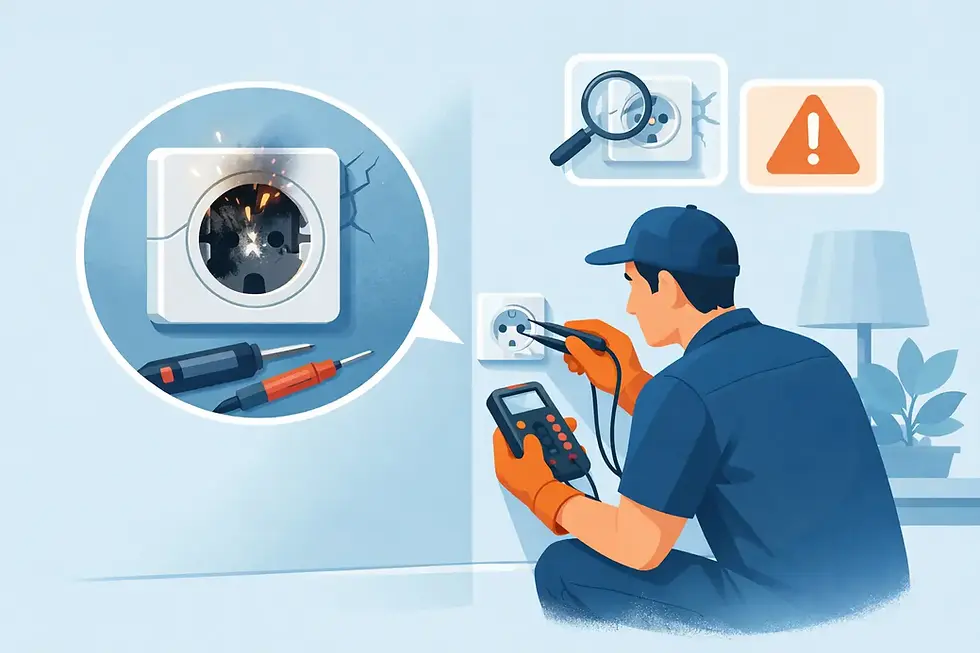
If something appears immediately dangerous, such as exposed live parts, scorching, smoke or a burning smell, do not wait for a routine inspection. Keep people away, isolate the supply if it is safe to do so without touching damaged equipment, and arrange urgent professional assistance.
Be ready to discuss the report
Once testing is complete, the EICR will record the overall outcome and any observations found. These are typically coded according to urgency. Danger requiring immediate action is treated very differently from an improvement recommendation, and your electrician should explain the practical meaning of the findings rather than leaving you to interpret technical wording alone.
Ask what needs attention first, whether any circuits have been made safe or isolated, and what remedial work is recommended. If repairs are needed, request a clear scope so you understand what is being proposed and why. At Blackpool & Fylde Electrical Services Limited, the aim is to give property owners straightforward advice they can act on, whether the installation needs minor repairs or more substantial improvement.
Preparation will not change the condition of your wiring, but it ensures the condition can be assessed properly. Clear access, honest information and sensible planning give you the best chance of a thorough inspection - and the confidence to act promptly on whatever the report identifies.


Comments