
What Causes Lights to Flicker? When to Act
- Paul Wild
- 7 hours ago
- 6 min read
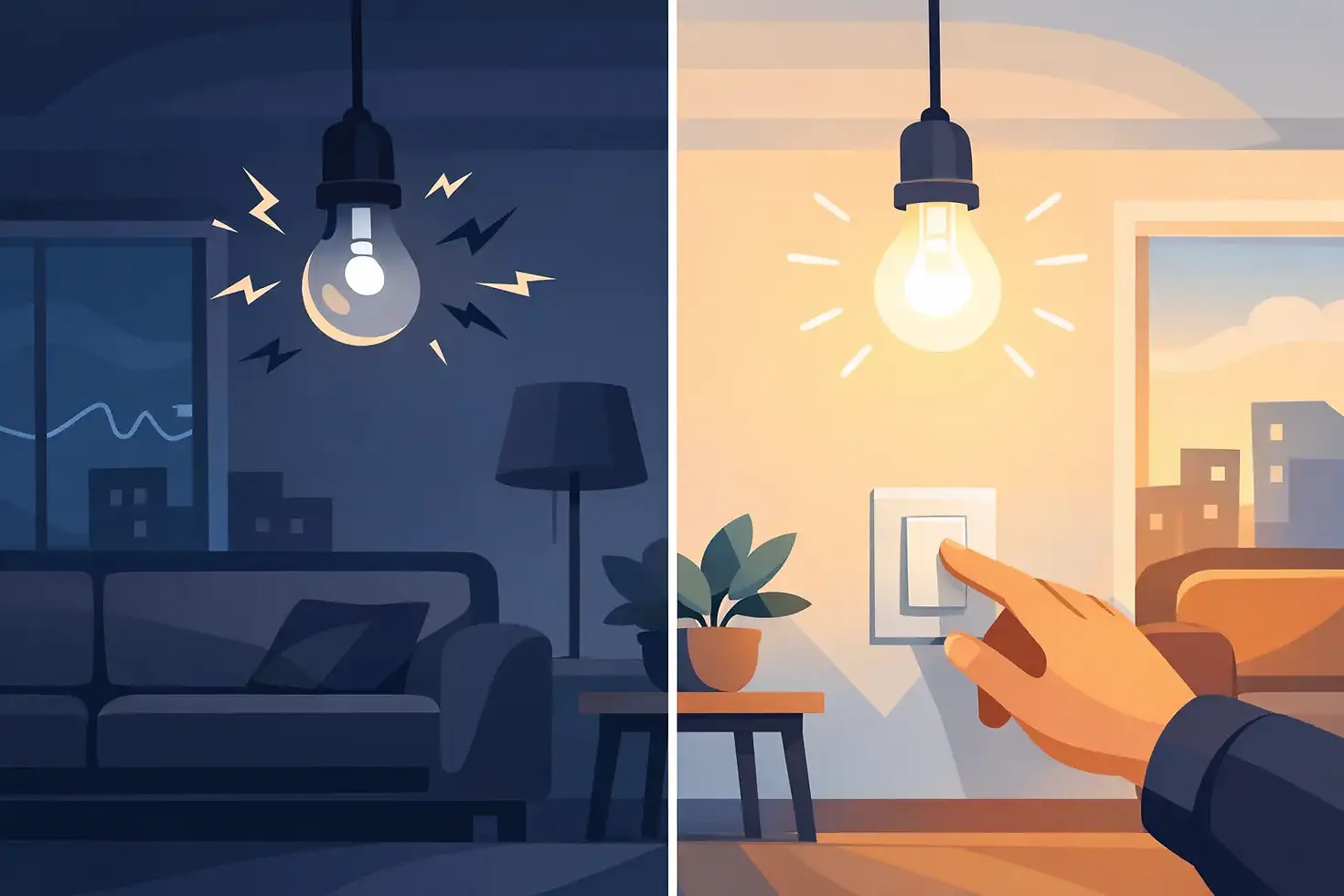
A lamp that flickers once when another appliance starts is easy to dismiss. But what causes lights to flicker can range from a loose bulb to a developing fault in the wiring, consumer unit or incoming electrical supply. The difference matters. Persistent or widespread flickering deserves proper attention, particularly in older properties, rented homes, shops and busy commercial premises.
Some lighting issues are simple to resolve safely. Others can indicate loose connections that create heat, damage equipment or increase the risk of electric shock and fire. The key is to notice the pattern: which lights are affected, when the flickering happens and whether anything else is behaving unusually.
What causes lights to flicker in a property?
Lights flicker when the electrical supply to the fitting is interrupted or fluctuates. That may happen at the lamp itself, within the light fitting, somewhere on the circuit, or outside the building on the electricity network.
An LED bulb can also appear to flicker for reasons that would not have affected an older incandescent lamp. LEDs use electronic drivers and are more sensitive to poor-quality components, incompatible dimmers and changes in voltage. That does not make every LED flicker harmless, but it does explain why the cause is sometimes local to one fitting rather than the whole installation.
A loose bulb, lamp or fitting connection
If only one light flickers, start with the least serious possibility. With the light switched off and allowed to cool, check whether the bulb is seated correctly. A lamp that has worked loose in its holder may lose contact as the fitting warms, cools or vibrates.
If tightening or replacing the bulb resolves the problem, there may be nothing further to investigate. However, do not force a bulb into a damaged holder, and do not continue using a fitting that feels loose, makes a buzzing sound or shows browning around the lamp holder. Those signs point to a fault that requires an electrician.
A poor-quality or failing LED lamp
Cheap or ageing LED lamps can flicker as their internal driver fails. This is especially common where a bulb has been installed in an enclosed fitting that traps heat, or in a bathroom, kitchen or external fitting exposed to moisture and temperature changes.
Try a known, good-quality replacement lamp with the correct cap type and wattage equivalent. If the new lamp is stable, the original bulb was likely the issue. If the replacement also flickers, the fitting, dimmer switch or circuit may be at fault.
An incompatible dimmer switch
Not every LED lamp is dimmable, and not every older dimmer switch works properly with LEDs. Traditional dimmers were designed for higher electrical loads. When used with a small LED load, they can cause flickering, flashing, humming or a light that will not turn fully off.
The practical solution may be to fit dimmable LED lamps and a compatible LED-rated dimmer. It depends on the existing equipment and the number of lamps on the circuit. A qualified electrician can confirm compatibility and replace the dimmer where needed.
When flickering points to a wiring fault
Repeated flickering in several rooms, or flickering that comes and goes when a switch, socket or appliance is used, should not be treated as a bulb problem. Loose or deteriorated electrical connections can interrupt the supply and generate heat at the same time.
Connections may loosen through age, vibration, previous poor workmanship or damage. Older properties around Blackpool and the Fylde Coast can also contain wiring and accessories that have reached the end of their safe working life. An installation does not need to fail completely before it needs attention.
Loose connections in the circuit
A loose terminal may be found at a ceiling rose, light switch, junction box, socket outlet or within the consumer unit. As current passes through a poor connection, resistance increases. That can cause voltage drop, intermittent lighting and overheating.
This is not a suitable repair for a homeowner, landlord or member of staff to attempt. The circuit needs to be safely isolated, tested and inspected to locate the issue. Simply tightening a visible screw without proving the circuit is dead and checking the condition of the cable can leave the underlying fault unresolved.
Problems at the consumer unit
If lights dim or flicker when a kettle, shower, heater, oven or machinery starts, the issue may involve circuit loading, a loose connection or a protective device in the consumer unit. A brief dip can occur as a high-load appliance starts, but noticeable or frequent changes need investigating.
Flickering combined with tripping breakers, a burning smell, crackling, heat around the consumer unit or scorch marks is more urgent. Switch off the affected circuit if it is safe to do so and arrange an emergency electrical inspection. Do not reset a breaker repeatedly in the hope that it will hold.
Damage, age or moisture in cables and accessories
Damaged cables, worn switches and moisture ingress can all create intermittent faults. Bathrooms, outdoor lighting, garages, workshops and commercial kitchens are common locations because of condensation, water exposure and demanding use.
In older installations, cable insulation may have deteriorated or accessories may no longer provide a reliable connection. A visual check alone cannot establish the condition of hidden wiring. Electrical testing is needed to assess insulation resistance, continuity, earthing arrangements and protective devices.
Could the electricity supply be responsible?
Sometimes the fault is not within your building. If lights flicker throughout the property and neighbours are experiencing the same issue, a disturbance on the local electricity network may be responsible. Weather damage, network switching and faults affecting the street can all cause temporary supply variations.
Check whether the issue affects more than one property where practical, without taking risks or relying on assumptions. If your neighbours have normal power but your lights are flickering across several circuits, arrange for an electrician to inspect your installation first. If there is evidence of a wider outage or supply fault, report it to the local electricity network operator.
A serious supply issue may also cause lights to become unusually bright as well as dim. Turn off sensitive equipment where safe to do so, avoid touching damaged service equipment, and seek urgent professional advice.
When should you call an electrician?
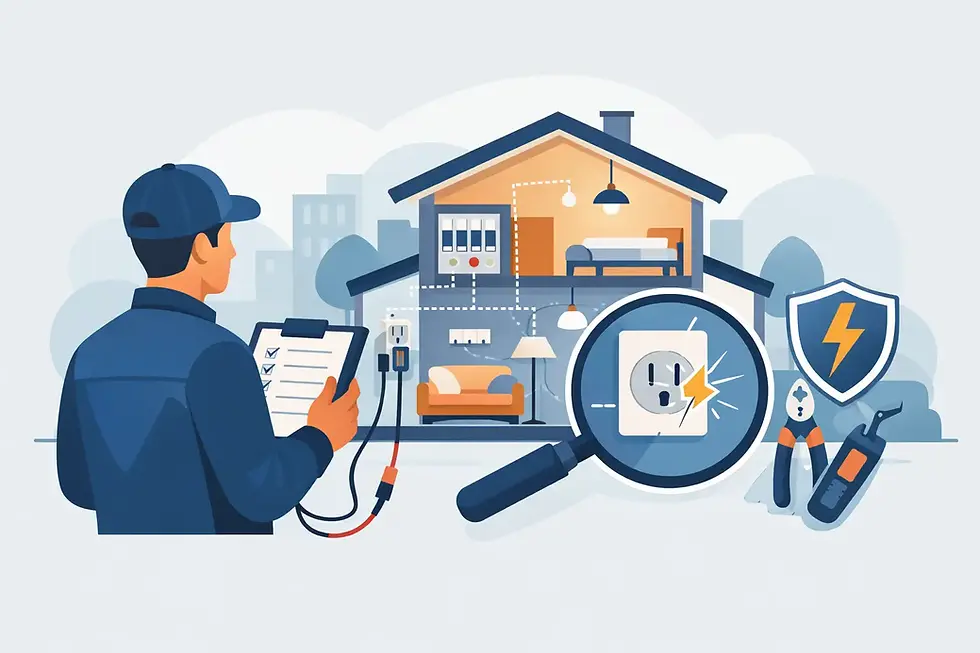
A single faulty bulb is one thing. Flickering that is persistent, affects multiple fittings or appears alongside other electrical symptoms is another. Arrange a professional fault-finding visit if the issue continues after replacing a compatible lamp or if it affects more than one room.
Treat the situation as urgent where you notice any of the following:
Burning smells, smoke, sparks, buzzing or crackling from a fitting, switch, socket or consumer unit.
Discolouration, melted plastic, heat or scorch marks around electrical accessories.
Repeated tripping, loss of power, shocks or tingling when touching metal fittings.
Lights that brighten and dim sharply, particularly when appliances are switched on.
If there is immediate danger, do not touch damaged equipment or exposed wiring. Isolate the supply at the consumer unit only if it is safe and you can do so without approaching heat, smoke or damage. Contact an emergency electrician, and call the emergency services if there is fire or immediate risk to life.
A safe approach for landlords and business owners
For landlords, flickering lights should be logged, investigated and repaired promptly rather than treated as a minor tenant nuisance. It may be a straightforward lamp replacement, but it can also reveal defects that affect the safety of the installation. Keeping inspection records and acting on reported faults supports both compliance and tenant safety.
In shops, offices, workshops and industrial settings, lighting faults can disrupt work and mask wider electrical problems. Equipment with high starting loads, three-phase supplies, external lighting and long circuit runs can make diagnosis more complex. The right response is targeted fault finding, not guesswork or repeated component changes.
Blackpool & Fylde Electrical Services Limited carries out electrical fault finding for domestic, commercial and industrial customers, with clear advice on what has failed, what work is needed and whether the issue requires urgent action.
Preventing recurring flickering
Good-quality lamps and compatible dimming equipment prevent many avoidable problems. Beyond that, regular electrical inspection helps identify loose connections, overloaded circuits, ageing accessories and deterioration before they become a disruptive or dangerous fault.
An Electrical Installation Condition Report is particularly valuable for landlords, older properties, commercial premises and buildings that have changed use over time. It is not a guarantee against every future fault, but it provides a tested view of the installation's condition and highlights work that should be completed.
Flickering lights are often the first visible sign that an electrical system needs attention. If the pattern is persistent or does not make sense, trust that warning and have the installation checked properly before a small interruption becomes a larger repair.


Comments