
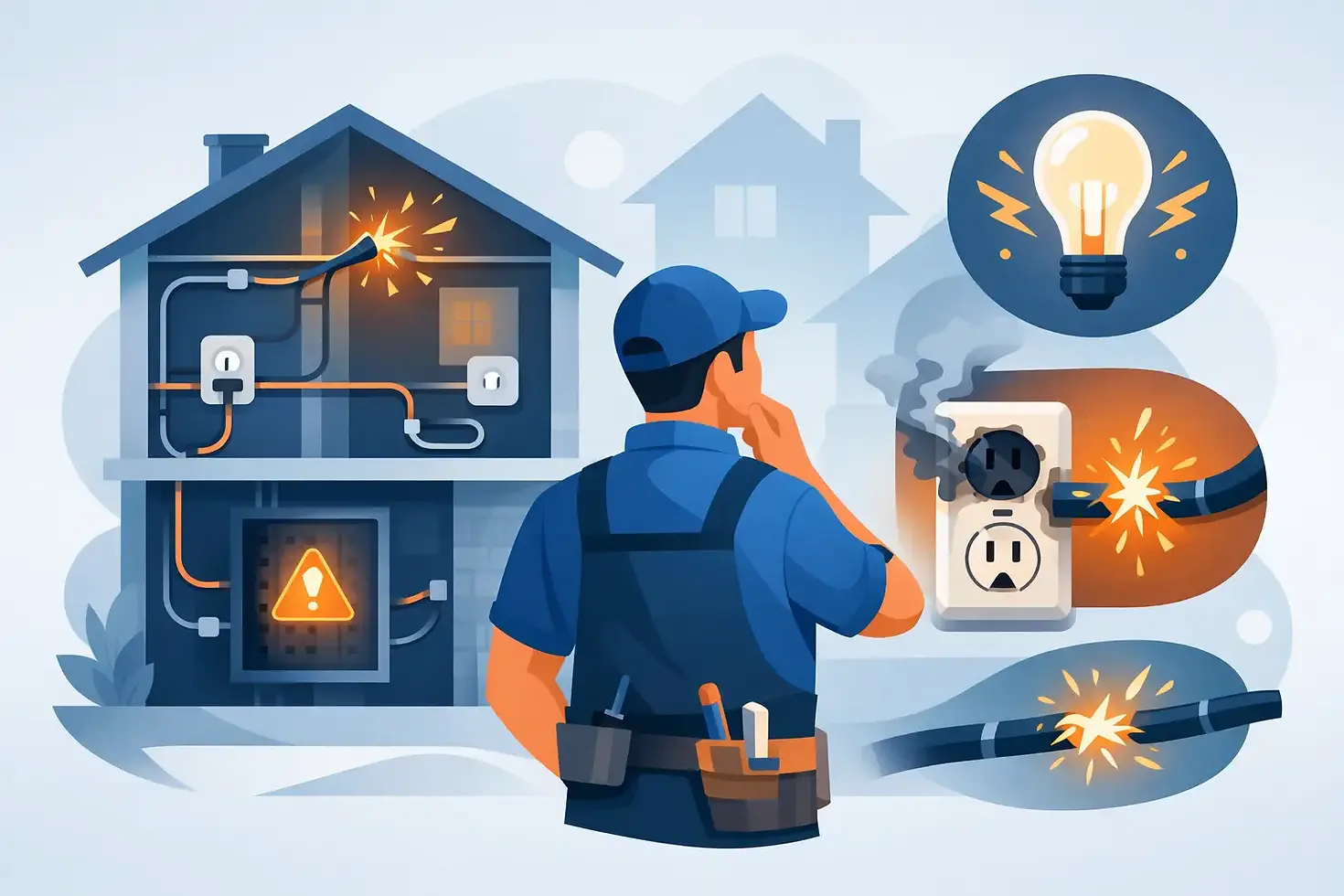
When Is a Rewire Needed? Key Warning Signs
- Paul Wild
- 4 days ago
- 5 min read
A home can look well maintained while its electrical installation is working beyond the point where it can be relied on. Old wiring is usually hidden behind walls, under floors and above ceilings, so the first signs are often easy to dismiss: a circuit that trips now and then, lights that flicker, or sockets that feel loose. Knowing when is a rewire needed helps homeowners, landlords and business owners act before minor faults become a serious safety risk.
A rewire is not automatically required simply because a property is old. Equally, a newer building can need remedial work if the installation has been altered poorly, damaged, overloaded or left incomplete. The right decision should be based on the condition of the wiring, the protective equipment, how the premises are used and the findings of a proper electrical inspection.
When Is a Rewire Needed in a Property?
A full rewire is generally needed when the existing cables, accessories or consumer unit cannot be made safe through proportionate repairs and upgrades. This may be because the wiring insulation has deteriorated, the circuits do not provide adequate protection, or the installation is no longer suitable for modern demand.
Properties built or last rewired several decades ago deserve particular attention. Older installations may contain rubber, lead-sheathed or fabric-insulated cables. Some homes still have VIR cable, short for vulcanised Indian rubber. Its insulation can become brittle with age, exposing conductors and increasing the risk of electric shock or fire. Aluminium wiring, unusual cable types, or an old fuse board with rewireable fuses can also indicate that a closer assessment is overdue.
Age alone is not a diagnosis. A qualified electrician should inspect and test the installation rather than making assumptions from the appearance of a fuse board or a single old socket.
Warning Signs You Should Not Ignore
Electrical faults do not always announce themselves dramatically. Repeated nuisance tripping, switches that spark, burning smells, discolouration around accessories and buzzing from a consumer unit all require prompt investigation. Do not keep resetting a circuit breaker without finding out why it has operated. It may be responding correctly to a fault that needs attention.
Other common signs include lights dimming when appliances start, sockets that are warm, cracked or loose, frequent blown lamps, and extension leads being used permanently because there are too few outlets. These issues do not all mean a full rewire is necessary, but they can reveal overloaded circuits, poor connections or an installation that has not kept pace with the way the property is used.
For landlords and property managers, recurring tenant reports should be taken seriously. A single damaged socket may be a local repair. Repeated reports across a property, especially alongside an unsatisfactory electrical inspection report, may point to a wider problem that needs planned remedial work or rewiring.
What an Electrical Inspection Can Reveal
An Electrical Installation Condition Report, commonly known as an EICR, provides the evidence needed to make an informed decision. During an inspection, an electrician examines accessible parts of the installation and carries out testing to assess the condition of circuits, earthing, bonding and protective devices.
The report identifies defects by code. A C1 observation indicates danger is present and urgent action is required. C2 means potentially dangerous and requires improvement without delay. FI means further investigation is needed. Any of these findings can affect whether a rewire, partial rewire or targeted repair is the sensible route.
An EICR does not always result in a recommendation for a complete rewire. A property may only need a consumer unit upgrade, improved earthing and bonding, replacement accessories, or repairs to specific circuits. This is why inspection matters. Rewiring where it is unnecessary creates cost and disruption, while relying on a visual guess can leave hidden defects unresolved.
Full Rewire or Partial Rewire?
A full rewire replaces the fixed wiring throughout a property, usually including new cabling, sockets, switches, lighting circuits and a modern consumer unit where required. It is often the most appropriate option where wiring is extensively aged, unsafe or inconsistent, or where major refurbishment is already exposing walls and floors.
A partial rewire can be suitable when only a defined area or group of circuits is in poor condition. For example, an extension may need new circuits, a kitchen may need to be rewired for additional appliances, or old upstairs lighting cables may require replacement while newer circuits elsewhere remain satisfactory.
The trade-off is straightforward: a partial rewire can reduce disruption and initial cost, but it must integrate safely with the existing installation. Mixing very old and new wiring is not automatically wrong, but all retained circuits still need to be safe, correctly protected and suitable for continued use. The electrician should clearly explain what is being retained, what is being replaced and why.
Renovations Often Create the Right Opportunity
If you are planning a new kitchen, loft conversion, extension or major refurbishment, it is worth considering the electrical installation before plastering and decorating begin. Modern kitchens, home offices, electric showers, induction hobs, EV chargers and outdoor supplies place greater demand on an installation than many older homes were designed to handle.
Rewiring during building work is usually less disruptive and more cost-effective than opening finished walls later. It also allows socket positions, lighting controls, data cabling, smoke alarms and dedicated circuits to be planned around how the space will actually be used.
For commercial and industrial premises, changes in equipment, machinery, layout or occupancy can have the same effect. A circuit that was suitable for office equipment may not be suitable for additional heating, catering appliances or production equipment. A review of load capacity and protection should form part of any significant change.
Safety and Compliance for Landlords and Businesses
In rented homes in England, landlords must ensure the electrical installation is inspected and tested at least every five years by a qualified person, with reports provided as required. If the report identifies remedial work, it must be completed within the stated timescale. Where defects are widespread, rewiring may be the clearest way to return the property to a safe standard.
Business owners and duty holders also have responsibilities to maintain electrical systems safely. The appropriate inspection interval depends on the type of premises and how it is used. A busy commercial unit, holiday accommodation or industrial site may need more frequent attention than a low-risk office. The key point is not to treat certification as paperwork alone. It is a practical check on the systems people depend on every day.
What to Expect During a Rewire
A rewire is significant work, so clear planning makes a real difference. Before work starts, the electrician should survey the property, discuss access, identify preferred locations for accessories and explain the likely extent of chasing into walls or lifting floorboards. In occupied properties, work can often be phased to keep essential areas usable, but some dust, noise and temporary loss of power should be expected.
Once the new installation is complete, it must be tested, certified and notified where required. You should receive the relevant electrical certification and clear information about the new consumer unit and circuit labelling. Keep these documents with property records, particularly if you are a landlord, managing agent or planning to sell.
Choosing the cheapest quotation without comparing scope can be a false economy. Check whether the price includes testing, certification, making good, replacement accessories, a consumer unit where needed and any assumptions about access. A detailed quotation makes it easier to compare like for like and avoids avoidable surprises during the project.
Do Not Wait for a Complete Failure
A property does not need to lose all power before action is justified. In fact, waiting for a major failure can mean a fault has already caused damage or created danger. If you have concerns about ageing wiring, tripping circuits, overheating accessories or an outdated fuse board, arrange a professional assessment rather than attempting repairs yourself.
For properties across Blackpool and the Fylde Coast, Blackpool & Fylde Electrical Services Limited can assess the condition of an installation, explain the available options and carry out the necessary work with safety and certification at the centre of the job. A timely inspection provides clarity, and clarity is the safest place to start.



Comments